Human Solidarity and Identification with Suffering
Promise at DawnHuman Solidarity and Identification with Suffering is the ethical idea through which Romain Gary connects private hardship to the condition of others. He understands suffering not as an isolated person’s misfortune but as evidence of a shared human predicament, and he extends that identification beyond humanity to animals and plants. The principle is both compassionate and demanding: it asks people to oppose abandonment and injustice, even when personal pride or comfort must wait.
From the individual self to a shared predicament
Gary’s account of humor supplies one key to this idea. He describes laughter directed at the self as a way of confronting more than personal shortcomings: beneath the temporary identity of an individual lies a common human situation, subject to biological, moral, spiritual, and metaphysical constraints. He presents humor as a weapon against those constraints and as an affirmation of dignity. Yet that gesture can fail to reach its audience. When others interpret self-mockery as self-hatred or mockery of loved ones as cruelty, Gary feels isolated; to him, the humor is an offered hand of fellowship, while their response preserves the walls around the individual self.
That tension makes solidarity more than a warm sentiment. Gary’s laughter attempts to make private vulnerability recognizable as shared experience, but recognition is not guaranteed. His idea of kinship begins with the refusal to treat the self as separate from the suffering of others; it also registers how easily people retreat into self-regard and mistake an appeal to common humanity for a personal attack.
Social justice and the duty not to abandon
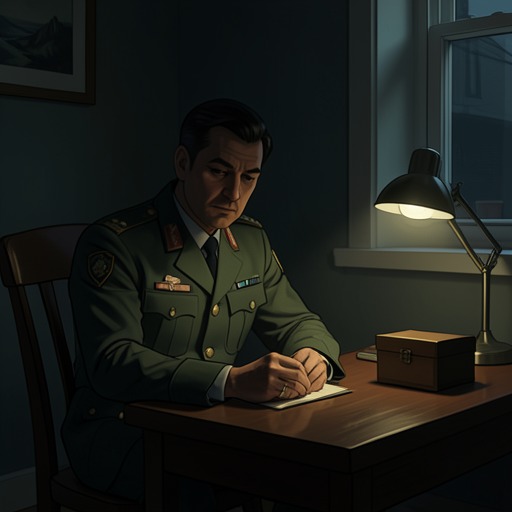
The principle becomes a social demand when Gary writes of women condemned to carry their children on their backs. He regards relief from that burden as an initial step, not the final meaning of justice: his more radical hope is that people might become masters of their fate. His mother’s visibly aging face repeatedly intensifies his sense that the world is unjust, turning an abstract conviction into a pressure that accompanies his work. He writes late into the night with the wish to make the world honorable.
In a later reflection, he describes a world in which no woman, whatever her background, would have to carry her child uphill, and in which no one would be left alone. But he does not present this commitment as an excuse to disregard immediate obligations. While his mother’s work and health sustain him, he believes he has to accept her help and postpone claims to pride or moral self-assertion. He continues his studies and writing while trying to keep faith with the future she expects of him. Solidarity therefore runs in two directions: toward people who face structural hardship, and toward the person whose labor makes his own life possible.
Identification across human and nonhuman lives
Gary explains his difficulty in accepting war as a solution through an unusually broad identification with suffering. He says that the wounds of others make him feel wounded himself, and that this response extends from people to animals and even plants. At a bullfight, he identifies with the bull rather than watching its pain at a distance; the cutting of trees and the hunting of animals also trouble him. This is not a claim that his sympathy is perfectly universal: he acknowledges that the killing of chickens does not affect him in the same way, because he cannot identify himself with them. That admission gives the principle a human, bounded shape rather than turning it into a claim of flawless compassion.
His view of wartime killing carries a related tension. He recognizes that he has killed in obedience to the conventions of his time, but says he did so without enthusiasm or satisfaction. He cannot make slaughter seem acceptable by investing it with a grand cause or a hymn of hatred. His account does not erase his participation in war; instead, it emphasizes the conflict between that participation and his felt kinship with those made to suffer. Solidarity here is an impediment to glorifying violence, not a claim that violence can simply be escaped.
Care, illness, and reciprocal dependence
The idea is also formed by episodes in which care is personal and urgent. During a grave illness in his youth, Gary worries that his mother will be left without support and that he will fail the future she has imagined for him. His concern for her becomes part of his determination to survive. When doctors recommend an operation on his kidney, his mother refuses it despite the specialist’s insistence. Her decision arises from her own beliefs about what the operation might mean for her son’s future. The episode reveals both the force of her care and the way their lives are bound together by hopes neither can treat as merely individual.
Years later, his mother collapses after her daily work, and a doctor identifies an insulin-related episode. Gary learns that she has diabetes and has been giving herself insulin each morning before beginning her duties. Her concealment and relentless routine make her vulnerability newly visible to him; he fears that she may die before the future she has worked toward is realized. His response links intimate dependence with his broader demand for justice: her life matters not as an emblem alone but as the life of a person whose labor and hopes deserve protection.
During a later illness in Damascus, care arrives from several people around him. Friends come to offer their blood, and a young Armenian nun nurses him. When he eventually regains enough clarity to speak, he asks when he and his comrades can return to battle, though the doctors doubt he will recover his former capacities. He does return to flying several months later. The episode gives solidarity a reciprocal form: the care that sustains him is not only an idea he extends outward, but something he receives from others while dependent on them. Taken together, these experiences make the principle neither abstract benevolence nor uncomplicated heroism. It is an insistence that no person’s suffering should be treated as irrelevant, joined to the recognition that survival, dignity, and hope are sustained through relationships.